Elizabeth Schwartz has had a wide-ranging career, from recipe books of Jewish food, to radio dramas such as The Witches of Lublin, to being one of the most acclaimed female Yiddish vocalists of a generation. Now, she has added yet another string to her bow with her new collection of horror novellas. The Sweet Fragrance of Life and Other Horror Stories takes influence from folklore and writers such as Angela Carter to carve a new niche within the Jewish gothic: “feminist shtetl horror.” The collection comprises three stories, each taking place in a different period of Jewish history, and each is presented in both English and Yiddish, with a translation by Nikki Olnianski.
To celebrate the release of “The Sweet Fragrance of Life and Other Horror Stories” in audiobook format (read by Yelena Shmulenson and with music by Yale Strom), writer and Jewish-horror obsessive Molly Adams of the Jewish Horror Review interviews Schwartz about the influences present in her writing, interacting with the horror genre as a Jewish woman, and her role in the survival of Yiddish.
Outside Prince Charles Cinema (photo credit: Bora Rex)
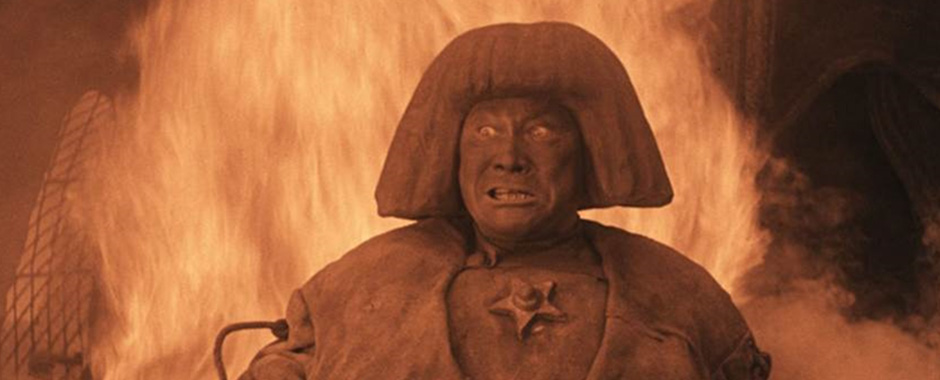
Hugo Max is a British-Austrian multi-hyphenate, with a career spanning music, film, and visual art. Among his most recent projects has been an extensive series of performances at UK cinemas, providing improvised viola scores to silent-era horror films. Among the ubiquitous films Hugo works with, such as Murnau’s Nosferatu and The Cabinet of Dr Caligari, is Der Golem, an under-appreciated work by Paul Wegener that explores the Jewish folk tale of the golem, a clay warrior animated by Kabbalah to protect (or avenge) the Jewish people. Despite Wegener’s film often being forgotten in the shadow of more famous silent films of the era, Hugo Max revises the horror canon, centring Der Golem as a work as crucial to the horror genre as Caligari or Häxan. During the latter end of his tour last year, Hugo was kind enough to sit down with JHR to discuss his creative process, Der Golem, and how we confront the anti-Semitism of early horror.
MA: So where did this project of scoring silent films begin?
HM: I performed my first live soundtrack alongside Murnau’s Nosferatu in Oxford during the film’s centenary year. I hadn’t seen the film for over a decade and was amazed by how vividly it had remained in my imagination. Around this time I had been working on a personal film project at the Prince Charles Cinema. The venue hadn’t programmed a silent film with live music for a while and invited me to accompany several screenings of Murnau’s film.
I have always found that the viola facilitates a space for experimentation. While I began learning the violin at the age of four, my journey with the viola started a little later when looking to expand my experience of playing chamber music, particularly string quartets. The viola sits in the middle of this instrumentation and so has a conversational, dramatic responsibility, but it also has such range. It’s a chameleon, and it’s a character itself. Incorporating viola improvisation into my solo practice and performances allowed me to draw on its theatrical qualities which would become integral to scoring silent film.
MA: So this project started with horror?
HM: Yes, or rather with Expressionism. I wanted to approach the film aware of its relationship with the Other, and with Jewish traditional music, but I hadn’t fully worked out what it would become at this point. Doing these shows, learning while I was going, and collaborating with different cinemas and films, has helped me realise the connection I have, particularly with German Expressionist horror. I’m really interested in the heightened gestural language of this movement. Expressionist films utilise what are now seen as the aesthetics or conventions of horror to undertake a more symbolic exploration of contemporaneous concerns. It’s because of this that many Expressionist works continue to thrive in our collective psyche.
MA: What initially drew you to Der Golem?
HM: Der Golem is a wonderfully rare example of the materiality of Jewish culture presented within the context of genre cinema. Although I’d heard about Der Golem, it was amazing that it even existed. I first watched it in 2019 when the new restoration of it was released, and I thought it was an amazingly strange film, as both a genre film and an art film. I hadn’t seen this sort of texture anywhere else, but it gave me a way to connect with the Jewish spirit. Moving on from Nosferatu and The Cabinet of Dr Caligari, Der Golem felt like a very natural progression and an opportunity to wear my references on my sleeve.
MA: I think with German Expressionism there’s so much Jewish culture and antisemitism running parallel through it. It’s hard to avoid once you look for it.
HM: Paul Wegener, the director and star of Der Golem, was not Jewish. He paradoxically exoticises medieval Jewish customs while being empathetic towards fears building in the Jewish community in the 1920s. The film was a global success on its initial release. I find it slightly unsettling to think of the contemporaneous non-Jewish audience marvelling at the phantasmagorical realisation of the religious practices depicted on screen. The film concludes with the closed gates of the ghetto filling the screen, separating and so protecting the world of the audience from the ‘dark magic’ of the film’s environment.
MA: You said something at a recent screening of Der Golem about your own Jewish heritage…
HM: Over the last five years, I have researched my Austrian-Jewish great-grandparents who fled Vienna in 1939. They shared a few details about their life before and during the war with their only daughter, my grandmother, and she has all these stories about her father which blur fact and fiction. I received my Hebrew name from my great-grandfather and so have always felt a connection with him even though we never met. Many of the silent films I have soundtracked tell stories that explore the Other, such as Der Golem and Nosferatu. Discovering the challenges faced by my great-grandparents intensified my approach to scoring them.
MA: I think it is a really interesting way to explore film, through your own heritage and practice, especially with the opportunity for contrast between Christian and Jewish liturgical music. Do you consciously incorporate those musical traditions when performing Der Golem?
HM: Melodies from the synagogue service and the klezmer tradition influenced me growing up, while my relationship with the viola developed primarily through performing Western classical repertoire. I can’t escape either as a point of reference. I adore this music, but I am in tension with it. I’m interested in how these two musical traditions can enter into dialogue while soundtracking Der Golem, which also provides an opportunity to share little known Jewish liturgical music with wider audiences. I think this juxtaposition works narratively, especially when comparing scenes in the synagogue or the ghetto to the scenes in the court, where I pay reference to Bach with a very explicit reimagining of the cello suites. I never really know how these ideas will come out, but I do know the point that I work towards.
MA: When you’re improvising these scores on-stage, how much do you respond to your audience? Are you locked in with the creative process and the film or is that more of a three-way relationship?
HM: I think it’s got to be a three-way relationship in service of the film and the audience. I’m foremost guided by the characters on screen and approach each performance as if they might behave differently and alter their fate, which I hope allows the film to take on new life. I feel incredibly lucky to have the opportunity to be so physically close to the projection and I notice new details with every performance. I think that there is a delicate path to tread whereby you respectfully infer the filmmaker’s intentions and find a present, more personal reading of a film in performance.
When I started doing this during the pandemic, what drew me to the process was that it’s an opportunity to maintain a creative intention for a sustained period of time, which gets so difficult when you’re working in these spaces to actually concentrate and do creative work. You’re there with an audience for an hour and a half, and you can’t lose conviction. I adore the intensity of that, I find it very compelling. The opportunity is so rare in the context of strict classical music training. There’s a sense in this that any sound can be developed, and you’re not not allowed to make anything. Anything can be beautiful.
MA: Do you have a preference between scoring comedy and horror?
HM: Well, scoring a comedy takes less of a toll on my headspace than soundtracking an Expressionist work! But I find horror more personal, and I think something about the visual language makes a lot of sense to me. I feel strangely at home with horror.
MA: A lot of Jewish folklore, particularly the golem, tends to evolve to reflect contemporary anxieties. In post-Holocaust iterations of the golem, it became less protective and more of a vengeful figure. Is that historical context something that you’re aware of as a composer?
HM: It’s really interesting that the golem progresses from protective to vengeful, because that process actually happens even within the space of Wegener’s film. Thinking structurally about my improvisation, the transformation from protective angel to aggressive monster works musically as my thematic motifs introduced at the beginning of the film unravel, become more interwoven, angular and disturbed throughout.
Wegener made three golem films of which only the last survives in full, 1920’s How He Came Into The World. He cast himself as the golem in each iteration, seeing something of himself in this creature sculpted out of clay. From what we know about the previous films, the golem is driven by jealousy and eroticism. In the 1920 version, it transforms from a protective figure to a violent one as it destroys the ghetto in the film’s climax. I feel that this change is inspired as much by Wegener’s awareness of growing anti-semitism in Europe and the historic persecution of Jews as his experience fighting in the trenches of World War I. The inner chambers of the ghetto look as if carved out of mud like the golem itself. I think creating this texture within the figurative context is very relevant to the process of creating the golem. When the rabbi is slapping clay on, he looks like Jackson Pollock in the studio. When you think about where Expressionist painting evolved to, it feels very much based on that context – the idea of creating an illusion of weight, the illusion of living.
MA: Do you find the anti-Semitism that runs through many German Expressionist films like this difficult to deal with? Or is it a part of the work you’re less interested in giving space to?
HM: I’m definitely concerned about it, and I think it’s impossible to ignore it. I’m not really interested in reclaiming these films. I don’t know if we can do that. But I think the lovely thing about screenings with a live score is that it bends the idea of a film being a fixed thing. Every screening is its own event, with its own meaning. I am affected [by the anti-Semitic undertones], and there are times when scoring Der Golem or Nosferatu is deeply painful actually, but I think that’s also part of what we’re doing, it’s really engaging and conversing with that discomfort.
MA: The fact that a lot of horror films from the silent era or from the German Expressionist movement are around 90 minutes in their runtime really works in your favour, not only with audiences’ shorter attention span after COVID, but also in terms of a sustained artistic exercise
HM: I think that there might be a limit to what the viola can do in this context but I want to keep pushing this, working with longer films and also celebrating those which are less regularly screened in the UK. Benjamin Christensen’s Häxan, which isn’t an Expressionist work, has otherwise been the longest silent film that I have scored so far. The film plays out in episodic lectures rather than as a single narrative trajectory like Der Golem. I wasn’t sure how I would approach it at first and found it disturbing to practise with. It’s very illustrative of the power of mystery. Watching it by myself I was horrified, but performing alongside Häxan ended up being the most rewarding show of the tour, the film coming alive with an audience. It was a joyous experience. It has that thrill of making audiences ask “What’s that? What will you show us next?”
MA: Do you find yourself influenced by other film scores within the genre? I suppose it could get a bit anachronistic, but I don’t know if you or audiences would get a kick out of that.
HM: Well, that’s also about whether your score is a simulation or whether you’re inhabiting the kind of world and soul of the film. You are the life of a character, when they make a decision you’re with that breath, you’re accompanying their gestures, which is so relevant with Der Golem because it’s about creating that sense of weight that the golem has. I don’t consider my musical approach to scoring silent films as constructing a soundtrack in the conventional sense, it’s much closer to theatrical performance.
I’m not particularly influenced by the music from other horror films. I do love the contemporary scores of Jonny Greenwood who imbues the films he soundtracks with a very distinct texture. The released soundtrack often differs slightly from the pieces of music featured in the film’s final cut. I think this allows films to expand in the imagination outside their runtime and hope that my improvised performances might offer something similar to the films of the past. I find that the most rewarding thing about this is after the screening, when people who weren’t aware that they were basically attending a solo viola recital come up to ask questions about the music process. It’s great, it’s bringing together an audience that has such respect for the music.
Hugo Max will be touring the UK this spring-summer with Max Plays Murnau, a series focused on the work of acclaimed German Expressionist director F. W. Murnau (including his iconic 1924 Nosferatu). To find out more, head to https://hugomax.co.uk/max-plays-murnau




 Jewish Horror Review